
Your eyes can tell a story: sometimes one that’s hard to face. Understanding what “alcoholic eyes” look like versus healthy eyes can reveal hidden health risks and guide you toward recovery support.
Looking in the mirror has become uncomfortable lately. Your reflection shows changes you can’t ignore anymore. The term “alcoholic eyes” might sound clinical, but the reality behind it touches every aspect of your daily life. When alcohol consumption becomes excessive, your eyes often become the first messengers, broadcasting signals about your health that go far beyond simple fatigue or a rough night.
What Are Alcoholic Eyes?
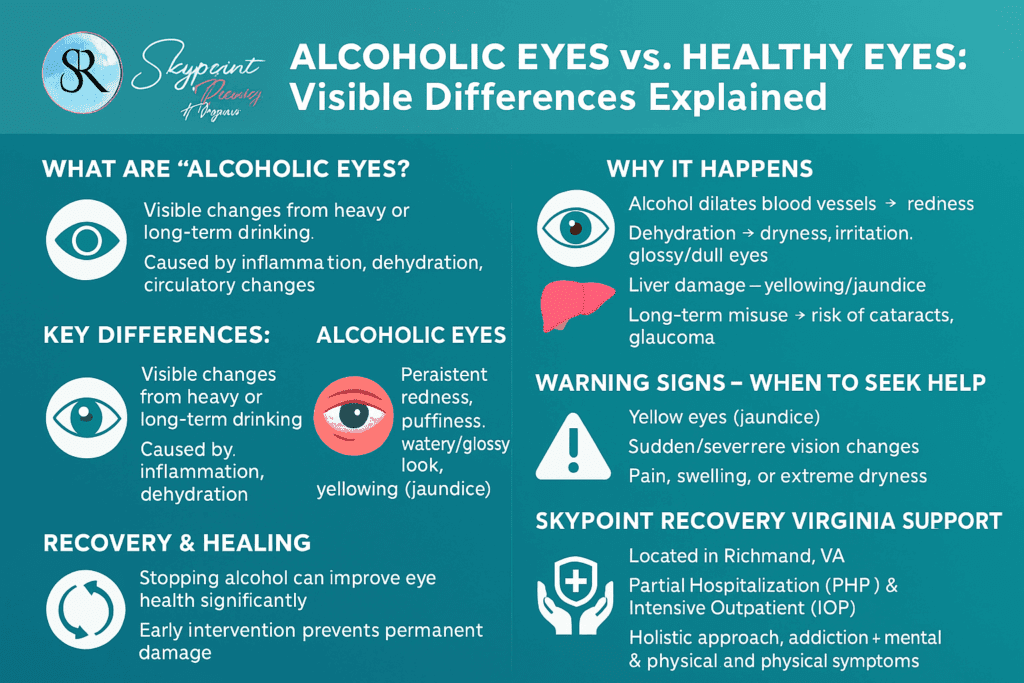
Alcoholic eyes refers to the distinct visual changes that occur in people who consume alcohol heavily or regularly over time. This medical and visual phenomenon encompasses multiple symptoms that affect both the eyes themselves and the surrounding facial tissues. Healthcare professionals recognize these changes as potential indicators of alcohol misuse and related health complications.
Alcohol affects the eyes through several mechanisms, including inflammation, dehydration, and circulatory changes. The delicate blood vessels in and around your eyes respond quickly to alcohol’s presence in your system, creating visible changes that can persist long after drinking stops.
Common alcoholic eyes symptoms include persistent redness in the sclera (white part of the eye), chronic puffiness around the eyelids, a glossy or watery appearance, and in severe cases, yellowing that indicates serious liver complications. These changes develop gradually, making them easy to dismiss initially, but they become increasingly difficult to hide as alcohol consumption continues.
Key Visible Differences Between Alcoholic and Healthy Eyes
Healthy eyes display clear, white sclera without persistent redness or discoloration. The eyelids appear firm and well-defined, without chronic swelling or drooping. Vision remains sharp and focused, and the eyes feel comfortable without constant irritation or dryness.
Red eyes from alcohol create one of the most noticeable differences between healthy and alcohol-affected eyes. While healthy eyes might occasionally appear red due to fatigue or allergies, chronic alcohol use causes persistent bloodshot appearance. This happens because alcohol dilates blood vessels throughout the body, including the tiny capillaries in your eyes, making them appear constantly irritated and inflamed.
Puffy eyes from drinking result from alcohol’s impact on your body’s fluid regulation. Healthy eyelids maintain their shape and firmness, but alcohol causes fluid retention and inflammation that creates a swollen, droopy appearance. This puffiness often appears worse in the morning and can make you look perpetually tired or unwell.
Jaundice and alcohol abuse create the most serious visible change in eye appearance. Healthy eyes maintain their natural white color, but when alcohol damages the liver, a yellowish tint develops in the sclera. This yellowing indicates that your liver cannot properly process toxins, allowing bilirubin to accumulate in your system.
Alcohol and eye health connection also manifests through chronic dryness and irritation. Healthy eyes feel comfortable and moist, but alcohol disrupts tear production and quality, leading to persistent dryness, burning sensations, and frequent blinking or rubbing.
Why Alcohol Causes These Changes in the Eyes
Alcohol impacts eye health in several ways:
- It dilates blood vessels, which increases redness and inflammation
- Dehydration reduces tear production, leading to irritation and a glossy or dull appearance
- Liver damage from long-term drinking can cause jaundice and alcohol abuse symptoms in the eyes
- Prolonged misuse raises the risk of serious vision problems and alcoholism-related diseases such as cataracts or glaucoma
These effects often worsen over time, making early recognition important
When to Be Concerned: Warning Signs That Require Medical Attention
Some eye changes linked to alcohol signal more than cosmetic issues. Seek medical attention if you notice:
- Persistent yellowing of the eyes
- Sudden or severe vision changes
- Pain, swelling, or extreme dryness that doesn’t improve
- Signs of vision problems and alcoholism such as blurred or double vision
In many cases, these symptoms are the body’s way of indicating more serious internal health problems.
How Skypoint Recovery Supports Holistic Health Beyond Addiction
Professional addiction treatment centers understand that alcohol and eye health problems represent just one aspect of comprehensive recovery needs. Located in Richmond, Virginia, Skypoint Recovery takes a holistic approach that addresses the physical health impacts of alcohol misuse alongside addiction treatment for men seeking recovery.
The facility’s integrated approach combines addiction treatment with medical and mental health care, recognizing that vision problems and alcoholism often occur alongside other health complications. This comprehensive perspective means that physical symptoms like eye changes receive attention as part of overall recovery planning.
Skypoint Recovery’s partial hospitalization and intensive outpatient programs provide medical monitoring that can track improvements in physical symptoms, including eye health, as men progress through recovery. This structured approach helps identify and address health complications early in the recovery process.
The supportive sober living environments at Skypoint Recovery offer men the opportunity to focus on healing while their bodies recover from alcohol’s effects. This includes allowing time for physical symptoms like puffy eyes from drinking and other alcohol-related changes to improve as the body heals.
Protecting Your Eyes and Health Through Recovery
Early intervention benefits both addiction recovery and physical health outcomes, including eye health. When you address alcohol misuse before serious complications develop, your body has a better chance of healing and returning to normal function. Alcoholic eyes can often improve significantly when alcohol consumption stops and proper medical care begins.
Taking control of your health requires honest assessment and professional support. If you’re noticing persistent red eyes from alcohol, chronic puffiness, or other concerning changes, these symptoms deserve attention from qualified healthcare providers who understand the connection between alcohol use and physical health.
Recovery represents an opportunity to protect your vision and overall health for the future. When you stop alcohol use and receive proper medical care, many alcohol-related health problems can improve or stabilize, preventing further damage. Our alcohol rehab program provides that medical care and a clear plan to protect your health going forward.
If you’re concerned about alcoholic eyes or other health changes related it, professional guidance can help you understand your options and develop a comprehensive recovery plan. Our team at Skypoint Recovery understands that alcohol involves addressing all aspects of health, including the physical changes that alcohol causes. Contact them at 804-552-6985 or fill out our online form to explore how our holistic approach can support your journey toward better health and lasting recovery.
Related Blogs
-
 Adderall Withdrawal: Symptoms, the Crash, and How Long It Lasts
 -
Kratom Withdrawal: Symptoms, Risks, and When to Get Help
-
PHP vs. IOP: What’s the Difference in Levels of Care?
-
What is Family Therapy in Addiction Treatment, and How Does It Help?
-
What is a Sponsor in AA, and Why Does Having One Matter?
-
DBT vs. CBT: What’s the Difference in Addiction Treatment?



Start Your Personalized Recovery Journey Now
 Call Us Now