
When you're worried someone you love is using drugs, it usually starts with small changes you can't quite explain. Common signs of drug use include red or glassy eyes, changes in sleep or weight, secrecy, new friends and missing money. One change on its own doesn't prove much, but a pattern that lasts for weeks is worth taking seriously. Some signs, like slow breathing or not waking up, mean you should call 911 right away. Below, we'll cover the signs to watch for, which ones are an emergency, and what to do next.
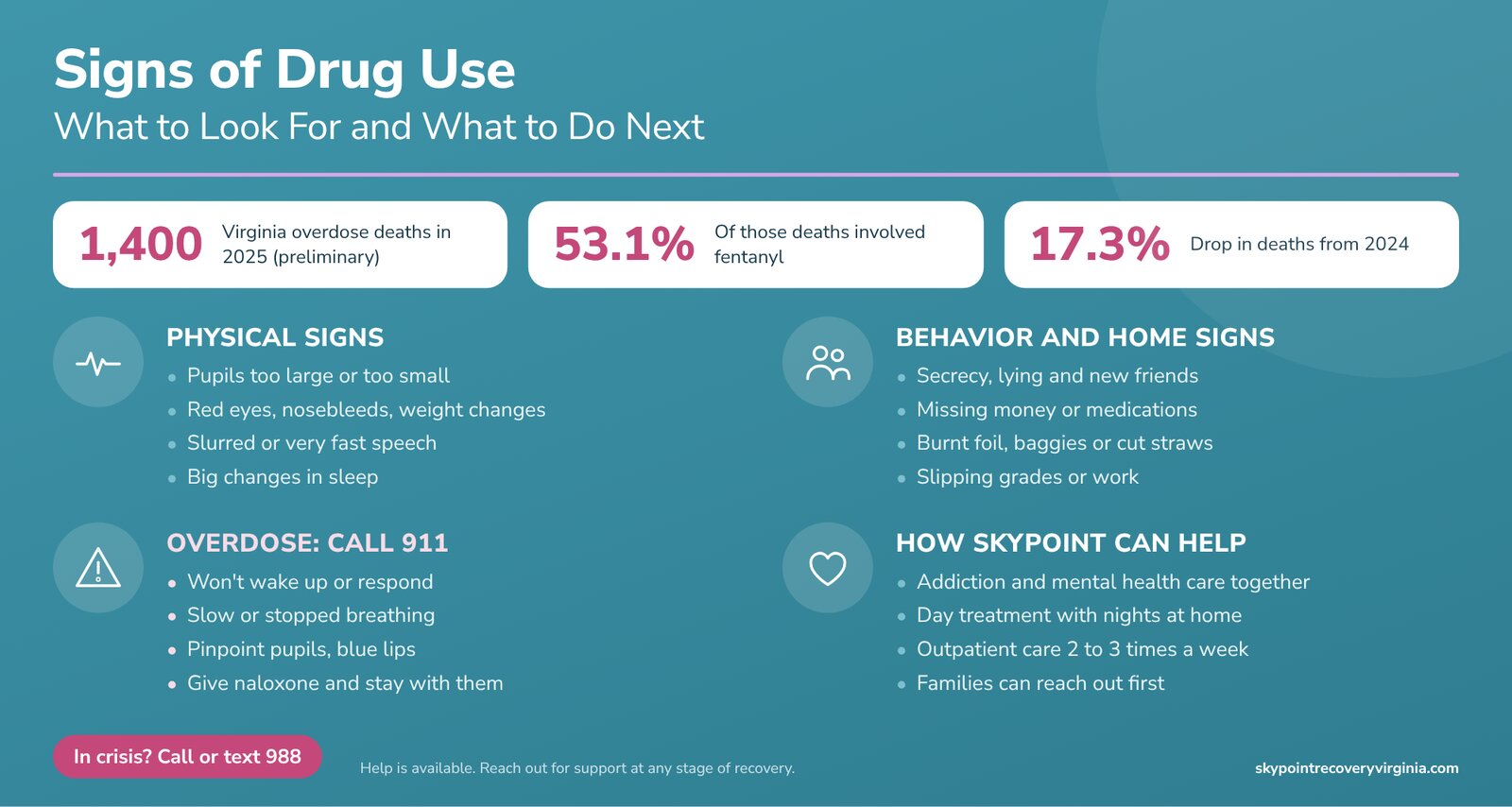
Signs of Drug Use at a Glance
Most warning signs fall into four groups. Use this table as a quick checklist, then read the sections below for more detail.
| Category | What you might notice |
|---|---|
| Physical | Pupils that are very large or very small, red eyes, weight loss or gain, nosebleeds, slurred speech, unusual smells on breath or clothes |
| Behavioral | Secrecy, new friends, dropping old activities, slipping grades or work, missing money, lying about where they've been |
| Emotional | Mood swings, irritability, anxiety, withdrawal from family, low motivation |
| Home and belongings | Pill bottles that empty too fast, burnt foil or spoons, small baggies, cut straws, frequent eye drops or air fresheners |
Physical Drug Use Symptoms
Physical signs depend on the drug, the amount and how long someone has been using. Some show up right after use. Others build over months.
- Eyes: Bloodshot eyes, pupils that look too big or too small for the lighting, or heavy eyelids
- Sleep: Sleeping much more or much less than usual, or staying up for long stretches
- Weight and appetite: Sudden weight loss, or eating much more at odd times
- Coordination and speech: Stumbling, shaky hands, slurred or very fast speech
- Skin and nose: Frequent sniffing or nosebleeds, sores, marks on the arms, or long sleeves in hot weather
- Hygiene: Less care about showering, clothes or appearance
Different drugs tend to cause different signs. This table shows general patterns only. People often use more than one substance, and many of these signs have other causes, so treat them as reasons to talk, not proof.
| Type of drug | Common signs during use |
|---|---|
| Opioids (pain pills, heroin, fentanyl) | Very small pupils, nodding off, slow breathing |
| Stimulants (cocaine, meth, misused ADHD pills) | Large pupils, talking fast, high energy, little sleep |
| Cannabis | Red eyes, increased appetite, a strong smell on clothes |
| Sedatives (benzodiazepines, sleep pills) and alcohol | Drowsiness, slurred speech, poor coordination, memory gaps |
Behavioral Changes and Warning Signs of Addiction
Behavioral changes are often easier to spot than physical ones, and they tend to show up first. Watch for:
- Secrecy and lying: Vague answers about where they've been, a locked phone, or stories that don't add up
- New friends and lost interests: Dropping sports, hobbies or old friends without a clear reason
- School or work problems: Falling grades, missed shifts, calls from teachers or a boss
- Money problems: Asking for money often, missing cash or valuables, selling belongings
- Mood swings: Sudden anger, anxiety or sadness, especially when they can't use
- Risky choices: Driving after using, legal trouble, or using in unsafe places
Our post on subtle signs that substance use has become unhealthy covers the quieter red flags, like rationalizing use or struggling to cut back.
Signs Around the House
Sometimes the clearest evidence turns up in the car, the bathroom or the trash.
- Prescription bottles that run out early, or pills missing from your own medicine cabinet
- Burnt foil, spoons, lighters or glass pipes
- Small plastic baggies, rolled bills or cut straws
- Empty bottles hidden in closets or the garage
- Lots of eye drops, mints, incense or air fresheners to cover smells
- Unexplained packages or new cash
If you find something, take a breath before you confront anyone. Write down what you found and when, so you can talk about facts instead of feelings.
When Signs of Drug Use Are an Emergency
Some signs mean you need help right now. An opioid overdose can happen with pills or powders that contain fentanyl, even if your loved one didn't know it was there. According to SAMHSA's naloxone guidance, the signs of an opioid overdose include:
- Not waking up or responding to touch or voice
- Very slow, irregular or stopped breathing
- Pinpoint pupils
- Blue lips and nose
If you see these signs, call 911 right away. If you have naloxone (often sold as Narcan), give it, then stay with the person until help arrives. Naloxone can reverse an opioid overdose, but its effects wear off, so the person still needs emergency care. Naloxone only works on opioids, so call 911 no matter what you think was taken.
Call 911 too for chest pain, a seizure, overheating, extreme confusion, or someone who can't stay awake after drinking or taking pills. If your loved one talks about suicide or you're worried about their safety, call or text 988.
Overdose in Virginia: What the Numbers Show
The latest Virginia Department of Health fatal drug overdose report counts 1,400 overdose deaths in Virginia in 2025, based on preliminary data. That's 17.3% lower than 2024 and well below the 2021 peak of 2,669 deaths.
The drop is real progress, but the risk is still high. Fentanyl was involved in 53.1% of Virginia's overdose deaths in 2025, and cocaine combined with fentanyl was the most common mix. That's why it's worth keeping naloxone at home if anyone in your family uses drugs, even drugs you don't think of as opioids.
When It's Mental Health Too
Many signs of drug use look a lot like signs of depression or anxiety. Pulling away from family, sleeping all day, losing interest in things they used to love and sudden irritability can come from either one, and often they come from both.
That overlap matters. Some people use drugs to cope with anxiety, trauma or low mood. Others develop mental health symptoms after using for a while. When both are present, treating only one tends to leave the other to pull your loved one back. At Skypoint Recovery Virginia, our team treats addiction and mental health conditions together, so your loved one doesn't have to sort out which came first before getting help.
What to Do Next
If you're seeing a pattern, here's how to help someone using drugs without pushing them away:
- Write down what you've noticed. Specific changes and dates help you stay calm and factual.
- Pick a calm moment to talk. Choose a time when your loved one is sober and you're not angry.
- Lead with care. Say what you've seen and why you're worried. Avoid labels like "addict."
- Listen more than you talk. Ask what's going on in their life. You may learn about stress or mental health struggles you didn't know about.
- Suggest a professional assessment. A doctor or treatment program can help figure out what's going on and what level of care fits.
- Lock up medications and keep naloxone at home. This lowers risk while you work on next steps.
- Get support for yourself. Family support groups and counseling can help you set boundaries and avoid burnout.
For more on starting that conversation, read our guide on supporting a friend or family member with addiction.
How Skypoint Recovery Virginia Helps
If your loved one is showing signs of drug use alongside anxiety, depression or other mental health struggles, Skypoint Recovery Virginia in Richmond offers care that addresses both.
- Treatment for addiction and mental health together. Our dual diagnosis program in Richmond treats co-occurring conditions such as anxiety and depression with cognitive behavioral therapy (CBT), dialectical behavior therapy (DBT), psychiatric evaluation and medication management.
- A structured day with nights at home. Our partial hospitalization program offers individual, group and family therapy, and clients return home each evening.
- Outpatient care that fits around life. Our intensive outpatient program meets 2 to 3 times a week, with day and evening options.
- Support after treatment. Peer support, sober living and transitional housing help your loved one keep building a stable routine.
You don't need to be sure it's addiction before you reach out. Family members can contact us on a loved one's behalf, and we offer a free, personalized consultation. Request a free consultation to talk through what you're seeing and what level of care might fit.
Frequently Asked Questions
What are the most common signs of drug use?
The most common signs include changes in sleep and appetite, red or glassy eyes, mood swings, secrecy, new friends, money problems, and slipping at school or work. One sign alone isn't proof. A pattern of several changes over weeks is more telling.
How can you tell if someone is on drugs by their eyes?
Eyes can offer clues. Pinpoint pupils can point to opioids, very large pupils can point to stimulants, and red eyes are common with cannabis. Still, lighting, medications and fatigue affect the eyes too, so look at the bigger picture.
What are the early warning signs of addiction?
Early warning signs include using more often or in larger amounts, needing more to get the same effect, trying and failing to cut back, and giving up activities to use. Hiding use and getting defensive when asked about it are also common early signs.
How do I know if my teenager is using drugs?
Watch for sudden changes in friends, grades, sleep, mood and spending, along with secrecy and missing medications at home. Teens go through normal mood changes, so focus on patterns that last. If you're worried, talk with your teen calmly and consider an assessment with their doctor.
The Bottom Line
No single clue settles it, but knowing the signs of drug use helps you act early, stay calm and get your loved one the right kind of help.
Related Blogs
-
 Signs of Drug Use: What to Look For and What to Do Next
-
Can You Force Someone Into Rehab? Options for Virginia Families
-
How to Help an Alcoholic Loved One: What Works and What Backfires
-
Is Valium Addictive? Dependence Risks and Signs to Watch For
-
Meth Withdrawal Symptoms: Timeline and What Helps in Early Recovery
-
Adderall Withdrawal: Symptoms, the Crash, and How Long It Lasts



Start Your Personalized Recovery Journey Now
 Call Us Now