
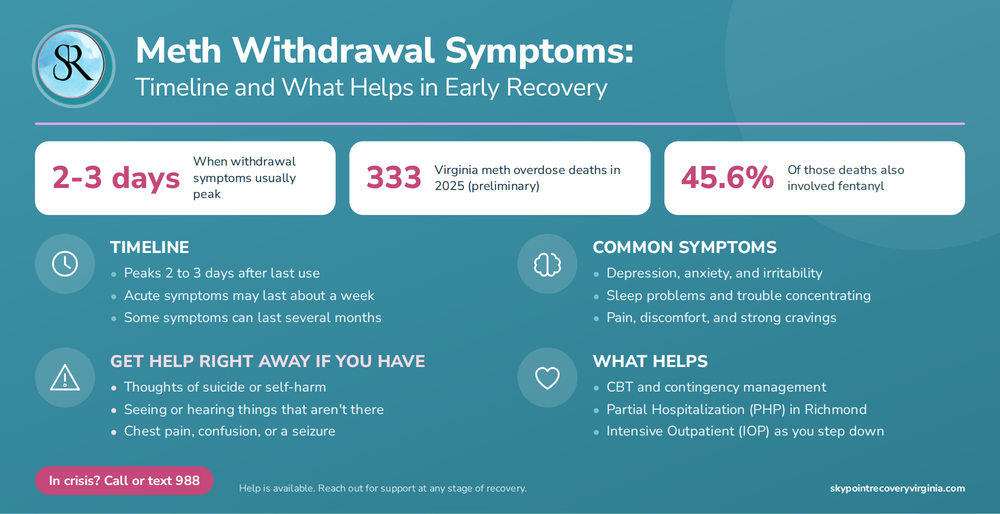
Meth withdrawal symptoms include depression, anxiety, irritability, exhaustion, poor sleep, trouble concentrating, and intense cravings. According to the National Institute on Drug Abuse, they usually peak 2 to 3 days after your last use and ease within about a week. Some can linger for months, and that longer stretch is often the hardest part. You may feel flat and low just as cravings come back, which is when relapse is most likely. Below, we’ll cover the timeline, what to watch for, and what helps.
Why Meth Withdrawal Happens
Methamphetamine boosts dopamine, a brain chemical tied to pleasure, energy, and motivation. With repeated use, the brain’s dopamine system changes. When you stop, it can take many months to recover, which is why the days and weeks after quitting can feel so empty and low.
Common Meth Withdrawal Symptoms
The main meth withdrawal symptoms are:
- Depression
- Anxiety
- Irritability
- Pain and discomfort
- Sleep problems
- Cravings
- Trouble concentrating
Many people also sleep for long stretches and feel very hungry in the first days.
Meth Withdrawal Timeline
Timing varies with how much and how long someone used, but here’s the general outline:
| Phase | What to expect |
| First 1 to 3 days | Symptoms build and usually peak 2 to 3 days after last use. Exhaustion, heavy sleep, and low mood are common. |
| Rest of week 1 | Acute symptoms may last about a week, then start to ease. |
| Weeks to months | Some symptoms, especially low mood, anxiety, and cravings, can last several months. |
That longer tail is why getting through the first week is only the start. The worst may be over, but the brain is still healing, and cravings can come back weeks or months later.
Warning Signs That Need Care Right Away
Call 911 or go to the nearest emergency room for chest pain, a seizure, confusion, or seeing or hearing things that aren’t there. Meth can also cause psychosis, including hallucinations and firmly believing things that aren’t true, even when someone isn’t high. If you or someone you love has thoughts of suicide, call or text 988 right away.
Why This Matters in Virginia
Meth deaths in Virginia are falling, but they’re still high. The Virginia Department of Health reports 333 methamphetamine overdose deaths in 2025 (preliminary), down from 402 in 2024. Fentanyl was the drug most often involved alongside meth, in 45.6% of those deaths. With fentanyl in the drug supply, relapse after a break carries real overdose risk. Keep naloxone (Narcan) on hand if anyone in your home uses.
What Helps in Early Recovery
There’s no FDA-approved medication for meth use disorder. But there are effective behavioral treatments:
- Cognitive behavioral therapy (CBT) helps you spot triggers and build new ways to handle stress and cravings.
- Contingency management gives small, real rewards, like vouchers or prizes, to help you stay off meth and keep coming to treatment. It’s the best-studied behavioral treatment for meth.
- Motivational interviewing and group support help you stay engaged when motivation dips.
At home, these steps help too:
- Sleep, eat, and hydrate. Your body is catching up after running on empty.
- Remove access. Delete dealer contacts and stay away from people and places tied to use.
- Plan for the weeks and months ahead, not just the first few days. Low mood and cravings can hang on long after the acute phase ends.
- Put your plan in writing. Our guide to building a relapse prevention plan walks you through it.
Skypoint Recovery in Richmond uses CBT in both its PHP and IOP to help you change the thought patterns that keep pulling you back toward meth.
How Skypoint Recovery Helps
The first weeks off meth need structure, and that’s what our PHP in Richmond is built for. You follow a consistent daily structure of individual therapy, group therapy, family therapy, CBT, and educational workshops, then return home each evening. As you get steadier, our Intensive Outpatient Program keeps you connected to care with day or evening sessions. If depression or anxiety is part of the picture, our dual diagnosis care includes psychiatric evaluation and medication management.
For more on meth’s effects, read how long meth stays in your system. When you’re ready, contact our admissions team.
Frequently Asked Questions
1. How long does meth withdrawal last?
Symptoms usually peak 2 to 3 days after last use and may last about a week. Some symptoms, like low mood, anxiety, and cravings, can continue for several months.
2. What are the first signs of meth withdrawal?
In the first days, many people feel low, anxious, and irritable and crave meth, then crash into exhaustion, long periods of sleep, and strong hunger.
3. Is meth withdrawal dangerous?
It can be. Depression can be severe, and psychosis can occur even when someone isn’t high. Thoughts of suicide, hallucinations, chest pain, or a seizure need emergency care.
4. Is there medication for meth withdrawal?
There’s no FDA-approved medication for meth use disorder. Behavioral treatments like CBT and contingency management are effective options.
Related Blogs
-
 Meth Withdrawal Symptoms: Timeline and What Helps in Early Recovery
-
Adderall Withdrawal: Symptoms, the Crash, and How Long It Lasts
-
Kratom Withdrawal: Symptoms, Risks, and When to Get Help
-
PHP vs. IOP: What’s the Difference in Levels of Care?
-
What is Family Therapy in Addiction Treatment, and How Does It Help?
-
What is a Sponsor in AA, and Why Does Having One Matter?



Start Your Personalized Recovery Journey Now
 Call Us Now