
Kratom withdrawal can hit when you cut back or stop after using kratom regularly. Most people feel achy and restless, have trouble sleeping, and deal with a runny nose, watery eyes, or diarrhea. It’s also common to feel tense and irritable. Since July 1, 2026, Virginia has required kratom labels to warn that it “may cause dependence and opioid-like withdrawal,” and for regular users, that warning is real. Below, we’ll cover what the symptoms look like, who’s at higher risk, and when to get help.
Why Kratom Causes Withdrawal
Kratom comes from the leaves of a Southeast Asian tree. Its main compounds act on the same brain receptors that opioids do. NIDA explains that the way kratom’s compounds activate those receptors may make it less addictive than opioids. Less addictive doesn’t mean harmless, though. With regular use, the body adapts, and stopping can cause withdrawal.
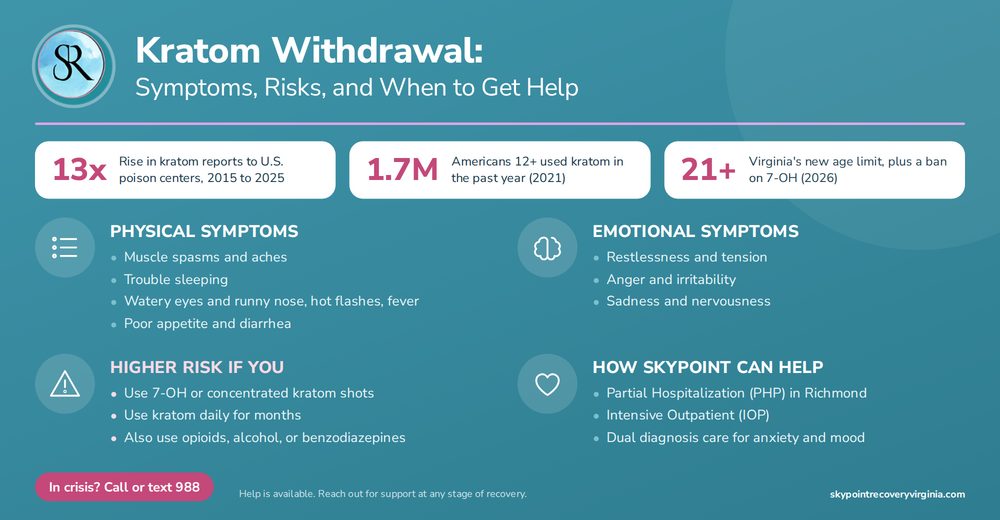
Plenty of people use it, too. About 1.7 million people age 12 and older used kratom in the past year, based on 2021 national survey data. The CDC found that kratom-related reports to U.S. poison centers rose from 258 in 2015 to 3,434 in 2025, an increase of about 1,200%.
Kratom Withdrawal Symptoms
A survey of 293 regular kratom users found that regular use was tied to dependence, withdrawal, and cravings. The most common withdrawal symptoms were:
Physical symptoms
- Muscle spasms and pain
- Trouble sleeping
- Watery eyes and a runny nose
- Hot flashes and fever
- Decreased appetite
- Diarrhea
Emotional symptoms
- Restlessness and tension
- Anger and irritability
- Sadness
- Nervousness
Research suggests kratom withdrawal is usually mild to moderate. Even so, it can feel miserable enough that people reach for something stronger just to make it stop.
Who’s at Higher Risk
Dependence and withdrawal are more of a concern if you:
- Use concentrated products or 7-OH. Lab-made 7-hydroxymitragynine (7-OH) is added to some products at much higher levels than the plant contains naturally, and it acts more strongly on opioid receptors than morphine does.
- Use kratom every day for months. In the same survey, more than half of people who had used kratom regularly for over six months had severe dependence.
- Also use other drugs. Using kratom with other substances may cause severe side effects, including liver problems or even death.
- Started kratom to manage pain, anxiety, or opioid withdrawal. When kratom is covering another problem, that problem comes back when you stop.
What Virginia’s New Kratom Law Means for You
Virginia passed House Bill 360 in 2026. Here’s what it changes:
| What changed | What it means for you |
| Products with high levels of 7-OH are banned | Your usual product may already be off shelves, which can mean sudden withdrawal |
| Sales limited to people 21 and older | Younger adults lose legal access to kratom products |
| Products kept behind the counter or locked up | You’ll have to ask a clerk for kratom instead of grabbing it off a shelf |
| Warning label: “may cause dependence and opioid-like withdrawal” | The state officially recognizes withdrawal as a risk |
If you’ve been relying on products high in 7-OH, the ban means your usual supply may already be gone or harder to find. Running out without warning can mean an unplanned withdrawal. If that’s where you are, it’s a good moment to make a plan instead of switching to whatever else is on the shelf.
What Helps During Kratom Withdrawal
There are currently no approved medical treatments for kratom withdrawal or kratom use disorder. In limited cases, researchers have reported using medications such as buprenorphine to manage symptoms, so talk with a medical provider if your use is heavy or you also use opioids.
Practical steps that make withdrawal easier:
- Don’t do it alone if you’ve used heavily. A provider can help you plan a gradual reduction and manage symptoms.
- Protect your sleep. Keep a steady bedtime and cut caffeine, since insomnia is one of the most common symptoms.
- Stay hydrated and eat small meals, especially if you have diarrhea or no appetite.
- Plan for the reason you started. If kratom was treating pain, anxiety, or low energy, you’ll need another way to manage that.
- Tell someone you trust so they can check in during the hardest days.
When to Get Professional Help
Reach out for treatment if you’ve tried to quit and couldn’t, if you use kratom alongside other substances, or if anxiety or depression gets worse when you stop. Call or text 988 if you have thoughts of suicide, and call 911 for any medical emergency.
Skypoint Recovery in Richmond can help you build a structured plan through partial hospitalization or intensive outpatient care.
How Skypoint Recovery Helps
Our PHP program gives you a consistent daily structure of individual therapy, group therapy, CBT, and educational workshops, while you return home each evening. When you’re ready to step down, our Intensive Outpatient Program keeps support in place as you get back to work and daily life. If anxiety or depression was part of why you started using kratom, we treat that alongside your substance use. Learn more about our dual diagnosis treatment.
Want to know more about the products themselves? Read our guide to whether OPMS kratom shots are safe. When you’re ready, visit our admissions page to start a confidential conversation with our team.
Frequently Asked Questions
1. What are kratom withdrawal symptoms?
The most commonly reported are muscle spasms and pain, trouble sleeping, watery eyes and runny nose, hot flashes, fever, poor appetite, and diarrhea. Emotional symptoms include restlessness, tension, irritability, sadness, and nervousness.
2. How long does kratom withdrawal last?
It varies with how much and how long you’ve used, and whether you used concentrated products or 7-OH. There isn’t a well-established timeline in the research yet, so if symptoms drag on or feel unmanageable, talk to a provider.
3. Is kratom withdrawal dangerous?
Research suggests it’s usually mild to moderate. The bigger concerns are relapse, switching to stronger products or opioids to feel better, and withdrawal from other substances used at the same time.
4. Is kratom legal in Virginia?
Kratom is still sold in Virginia, but a 2026 law (HB 360) bans products with high levels of 7-OH, limits sales to people 21 and older, and requires a warning that kratom may cause dependence and opioid-like withdrawal.
Related Blogs



Start Your Personalized Recovery Journey Now
 Call Us Now